Đáp án Unit 7 lớp 11 Global success: Education options for school-leavers
 IELTS LangGo
  14/09/2026



Unit 7 Tiếng Anh lớp 11 sách Global Success với chủ đề Education options for school-leavers (Các lựa chọn giáo dục cho học sinh tốt nghiệp) giúp học sinh tìm hiểu về các con đường học tập và phát triển nghề nghiệp sau khi rời ghế nhà trường, bao gồm giáo dục đại học và giáo dục nghề nghiệp.
Bài viết tổng hợp đầy đủ đáp án và gợi ý trả lời cho tất cả các hoạt động trong Unit 7, giúp các bạn học sinh lớp 11 củng cố kiến thức và đạt kết quả cao trong học tập.
>>> Xem thêm: Lời giải Tiếng Anh 11 Global Success 10 Unit
I. Getting Started - Planning our education
1. Listen and read - A presentation about planning education
Phần mở đầu của Getting Started Unit 7 là cuộc hội thoại giữa cô Hoa, Mai và Nam về các lựa chọn giáo dục sau khi tốt nghiệp trung học phổ thông. Học sinh cần nghe và đọc để hiểu về giáo dục đại học và giáo dục nghề nghiệp.
2. Read the conversation again. Decide whether the following statements are true (T) or false (F)
Đáp án:
| Câu | T/F |
| 1. School-leavers only have the option of academic education. | F |
| 2. Good grades at school can help students get into university. | T |
| 3. Vocational schools are for those who want to develop job skills. | T |
| 4. Nam wants to work at his father's car repair shop after leaving school. | F |
3. Find phrases in the conversation that mean the following
Đáp án:
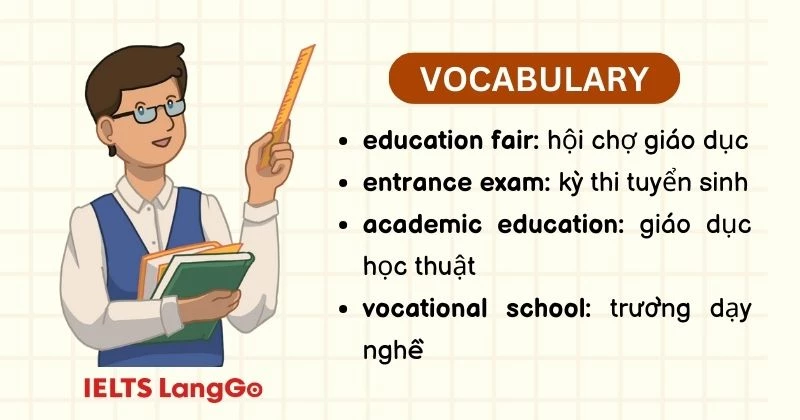
1. education fair - an event at which students can talk to representatives of universities or vocational schools about their study options
2. entrance exam - an exam that someone takes to be accepted into a school or university
3. academic education - studying at school or university to gain knowledge and develop thinking skills
4. vocational school - a place that teaches skills needed for particular jobs
4. Complete the sentences using phrases from 1
Đáp án:
1. Having won several biology competitions, Mai wants to study biology and become a scientist.
2. Mai's mum still regrets not having gone to university.
3. Having watched his father work very hard for many years helped Nam make his decision.
>>> Xem chi tiết: Tiếng Anh 11 Unit 7 Getting Started
II. Language
Phần Language Unit 7 tập trung vào 3 nội dung chính: ngữ điệu trong câu hỏi Wh- và Yes/No, từ vựng về giáo dục sau trung học, và ngữ pháp về perfect gerunds và perfect participle clauses.
Pronunciation - Intonation in Wh- and Yes/No questions
Phần phát âm giúp học sinh nắm vững cách sử dụng ngữ điệu tăng (rising intonation) và giảm (falling intonation) trong các câu hỏi tiếng Anh.
Bài tập 1: Listen and repeat. Pay attention to the falling (↘) or rising (↗) intonation
1. Did anyone go? ↗
2. Is academic education important nowadays? ↗
3. What are your plans for the future? ↘
4. When does the course start? ↘
Bài tập 2: Listen and mark the intonation, then practise saying them in pairs
1. Do you want to go to university? ↗
2. Have you talked with your parents about your plans? ↗
3. How much does it cost to study at university? ↘
4. What's your favourite subject at school? ↘
Vocabulary - Completing your education
Phần từ vựng cung cấp các từ và cụm từ thiết yếu liên quan đến giáo dục sau khi tốt nghiệp trung học.
Bài tập 1: Match the words and phrase with their meanings
1 - c: school-leaver (n) = a person who has just left school
2 - d: vocational education (np) = education that prepares students for work in a specific trade
3 - a: higher education (n) = education at a college or university
4 - e: qualification (n) = an official record showing that you have finished a training course or have the necessary skills, etc.
5 - b: graduation (n) = the act of completing a university degree or a course of study
Bài tập 2: Complete the sentences using the correct form of the words
1. Many parents nowadays want their children to pursue higher education at universities after leaving school.
2. He didn't get the job he wanted because he didn't have the right qualifications.
3. Many school-leavers choose to go to university to study academic subjects.
4. More and more young people prefer vocational education because they like to learn practical skills.
5. Many young people find it hard to get a job immediately after graduation.
>>> Xem thêm: Tổng hợp Từ vựng Unit 7 lớp 11 Global Success
Grammar - Perfect gerunds and Perfect participle clauses
Phần ngữ pháp tập trung vào hai cấu trúc quan trọng: perfect gerunds (động danh từ hoàn thành) và perfect participle clauses (mệnh đề phân từ hoàn thành).
Bài tập 1: Find and correct the mistakes
1. have discussed → having discussed
2. Had won → Having won
3. having choose → having chosen
4. had won → having won
Bài tập 2: Rewrite these sentences using perfect participle clauses
1. After we listened to an introduction to the course, we asked some questions.
→ Having listened to an introduction to the course, we asked some questions.
2. He failed the university entrance exams, then he decided to train to become a car mechanic.
→ Having failed the university entrance exams, he decided to train to become a car mechanic.
3. His brother had not studied hard enough, so he failed the exams.
→ Not having studied hard enough, his brother failed the exams.
4. After I answered the job interview questions, I was asked to prepare a short presentation.
→ Having answered the job interview questions, I was asked to prepare a short presentation.
Bài tập 3: Work in pairs. Make sentences, using perfect gerunds and perfect participle clauses
Mẫu câu gợi ý:
Perfect Gerunds:
- Having studied abroad improved my language skills significantly.
- She regretted not having chosen medicine as her major.
- They talked about having participated in the science fair last year.
Perfect Participle Clauses:
- Having passed all the entrance exams, she enrolled in her dream university.
- Not having received any scholarship offers, he decided to work for a year before applying again.
- Having gained practical experience through internships, many students found it easier to get jobs.
>>> Xem chi tiết: Tiếng Anh 11 Unit 7 Language
III. Reading - Options for school-leavers
Phần Reading Unit 7 giới thiệu bài đọc về các lựa chọn giáo dục dành cho học sinh tốt nghiệp, giúp học sinh hiểu rõ sự khác biệt giữa giáo dục đại học và giáo dục nghề nghiệp.
1. Work in pairs. Which of the two options for school-leavers is more common in your town? Can you think of other options?
Gợi ý trả lời:
In my town, going to college or university is more common among school-leavers. Most families believe higher education provides better career opportunities and social status. However, vocational education is becoming popular among students with clear career goals in fields like hospitality, mechanics, or IT who want to gain practical skills quickly and start working earlier.
Other options include:
- Taking a gap year to gain work experience
- Studying abroad
- Taking online courses or certificate programs
- Starting a business or working in family businesses
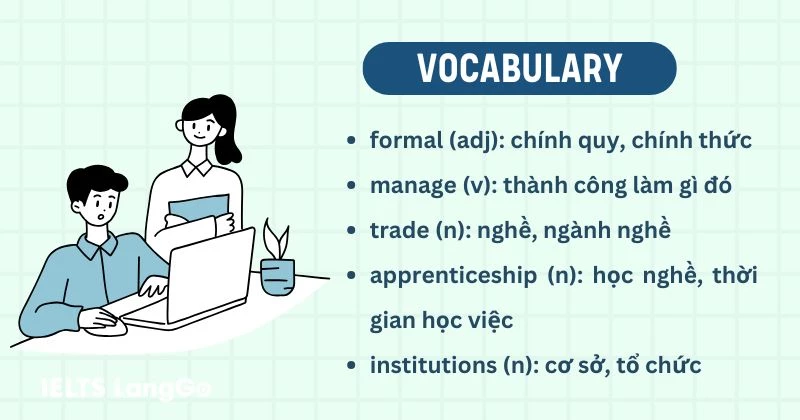
2. Read the article. Match the highlighted words with their meanings
Đáp án:
1 - e: formal = received in a school, college, or university, with lessons, exams, etc.
2 - c: manage = to succeed in doing something difficult
3 - a: trade = a job that requires special training and skills
4 - b: apprenticeship = a period of time working for and learning from a skilled person
5 - d: institutions = important organisations that have a particular purpose
3. Read the article again. Match the headings (1-3) with the paragraphs (A-B). There is ONE extra heading
Đáp án:
1. Getting vocational training → Paragraph B
2. Going to college or university → Paragraph A
4. Read the article again and complete each gap with ONE word
Đáp án:
College or university:
- For students who want (1) formal learning
- Get a (2) degree related to an academic subject
- Join different clubs
Vocational school:
- For students who want to work in a specific (3) trade
- Can offer an (4) apprenticeship
- Finish their (5) training quickly and start earning a salary
5. Work in pairs. Discuss the following questions
Which of the two options will be appropriate for you after leaving school? Why?
Đây là phần thảo luận mở khuyến khích các bạn học sinh suy nghĩ về con đường học tập phù hợp với bản thân dựa trên sở thích, năng lực và mục tiêu nghề nghiệp.
>>> Xem chi tiết: Tiếng Anh 11 Unit 7 Reading
IV. Speaking - Vocational training vs. academic study
Phần Speaking Unit 7 yêu cầu học sinh thảo luận về lợi ích của giáo dục nghề nghiệp và giáo dục đại học, giúp phát triển kỹ năng giao tiếp và lập luận.
1. Work in pairs. Complete the table below
Hoạt động này giúp học sinh suy nghĩ và liệt kê các lợi ích của hai hình thức giáo dục.
Gợi ý trả lời:
| Benefits of vocational training | Benefits of academic study |
| • cost less • provide shorter duration of study • develop practical skills • gain immediate job-readiness • hands-on learning experience • lower student debt • industry-specific qualifications • flexible learning schedules | • can earn more • develop critical thinking skills • develop research skills • access to higher-level careers • broader knowledge base • networking opportunities • intellectual development • prestige and credentials |
2. Complete the conversation with the sentences in the box
Đáp án:
(1) D - Now, let's think about one more benefit.
(2) A - It's the cost. Vocational training is much cheaper than university education.
(3) B - I couldn't agree more. So, we've decided on the three main benefits: more practical, shorter, and cheaper.
(4) C - Great! We're now ready to report to the class.
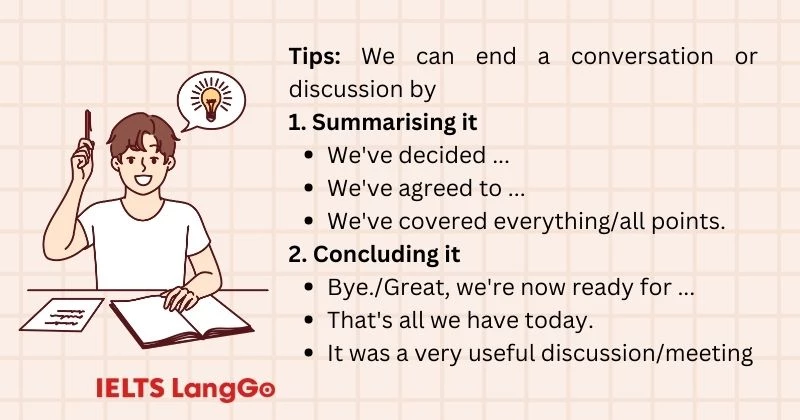
3. Work in pairs. Talk about the benefits of academic study
Gợi ý hội thoại:
Student A: Let's decide on the three main benefits of academic study. First, I think it will help students develop critical thinking skills.
Student B: I agree. University courses require students to analyze complex issues deeply.
Student A: What do you think is the second benefit?
Student B: I think it's developing research skills. University students learn how to conduct thorough research and present findings professionally.
Student A: Now, let's think about one more benefit.
Student B: It's the earning potential. University graduates can earn more over their lifetime.
Student A: I couldn't agree more. So, we've decided on the three main benefits: better critical thinking, stronger research skills, and higher earnings.
Student B: Great! We're now ready to report to the class.
4. Work in groups. Discuss what kind of students each option will be more suitable for
Gợi ý thảo luận:
Vocational training is more suitable for:
- Students who have clear career goals in specific trades (mechanics, electricians, chefs, etc.)
- Learners who prefer hands-on, practical learning over theoretical study
- Those who want to start working and earning money quickly
- Students who learn better through doing rather than reading
- Those with financial constraints who need shorter, more affordable education
Academic study is more suitable for:
- Students who enjoy theoretical learning and research
- Those who want careers requiring advanced degrees (medicine, law, engineering, science)
- Learners who are interested in continuing to postgraduate studies
- Students who want broader career flexibility and options
- Those who excel in academic subjects and enjoy intellectual challenges
>>> Xem chi tiết: Tiếng Anh 11 Unit 7 Speaking
V. Listening - Vocational courses
Phần Listening Unit 7 giúp học sinh rèn luyện kỹ năng nghe hiểu thông qua cuộc hội thoại về các khóa học nghề tại một trường dạy nghề.
1. Work in pairs. Look at the picture and discuss
Gợi ý trả lời:
1. They are taking a cooking course or culinary training course.
2. I think students need to have a high school diploma and an interest in cooking. Some courses may require basic cooking skills.
3. Students expect to learn professional cooking skills, food preparation techniques, and kitchen safety. They also want to gain practical experience.
2. Choose the correct meanings of the underlined words and phrase
Đáp án:
1. I want to become a restaurant cook, so I'm looking for a professional cooking course.
→ B. connected with a job that needs special training and skills
2. Once you join a course, you'll have the opportunity to work as an apprentice in a restaurant.
→ A. a person working for an employer to learn a skill or a job
3. We can learn a lot about a particular school from its school brochure .
→ B. a small book giving information about something
3. Listen to a conversation between Mai and the receptionist at ABC Vocational School. What are they talking about?
→ Đáp án: B. Cooking courses at the vocational school.
4. Listen to the conversation again and complete the notes. Use no more than TWO words for each gap
Đáp án:
(1) months
(2) professional cooking
(3) restaurant cooks
(4) apprentice
(5) school brochure
5. Work in pairs. Discuss the following questions
Would you be interested in a cooking course? Why/Why not? If yes, what kind?
Gợi ý trả lời:
Yes, I would definitely be interested in a cooking course. I enjoy preparing meals for my family, and I think learning professional cooking techniques would help me create more delicious and nutritious dishes. I would prefer taking a short cooking course first to see if I really love it. These courses are perfect for learning basic skills like food preparation, knife techniques, and understanding different cooking methods. If I find that I'm truly passionate about cooking, I might consider a professional cooking course in the future to pursue a career as a chef.
Moreover, cooking is a valuable life skill that everyone should have. Even if I don't become a professional chef, the knowledge and skills I gain from a cooking course will be useful throughout my life. It would also be a great way to explore different cuisines and cultures through food.
>>> Xem chi tiết: Tiếng Anh 11 Unit 7 Listening
VI. Writing - A request letter about a course
Phần Writing Unit 7 hướng dẫn học sinh cách viết thư yêu cầu thông tin về khóa học tại trường dạy nghề.
1. Look at the advertisement and complete the enquiries
Bài tập này giúp học sinh làm quen với các câu hỏi thường gặp khi hỏi thông tin về khóa học.
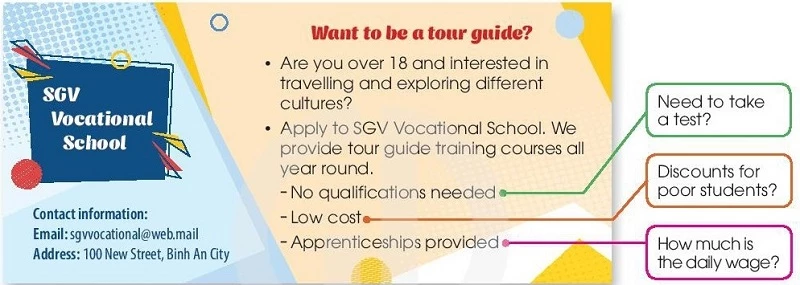
Đáp án:
1. Could you please tell me if I need to take a test?
2. I would like to know if there are any discounts for poor students.
3. I would appreciate it if you could tell me how much the daily wage is.
2. Write a letter (140-170 words) to request information about the courses
Phần này yêu cầu học sinh viết một bức thư hoàn chỉnh theo cấu trúc chuẩn.
Tips for writing a request letter:
Formal emails or letters asking for information usually have the following structure:
1. Greeting: Dear Sir/Madam, (or name if known)
2. Reason(s) for writing: I would like to have more information about... / I am writing to enquire about...
3. Enquiries (one paragraph for each of the things you want to ask about, using linking words or phrases):
- First, I would like to know...
- In addition, I wonder if...
- I would appreciate it if you could tell me...
- It would be great if you...
4. Closing line: I look forward to hearing from you/receiving your reply.
5. Signature: Yours sincerely, (if you know the name) / Yours faithfully, (if you don't know the name)
>>> Xem bài mẫu chi tiết: Tiếng Anh 11 Unit 7 Writing
VII. Communication and Culture / CLIL
Phần Communication and Culture giúp học sinh học cách đặt lịch hẹn bằng tiếng Anh và tìm hiểu về hệ thống giáo dục sau trung học tại Anh.
Everyday English - Making an appointment
1. Listen and complete the conversation
Đáp án:
(1) - D. could I meet you
(2) - C. I have another appointment
(3) - B. shall I come
(4) - A. suit you
2. Work in pairs. Make similar conversations
Học sinh vận dụng mẫu hội thoại để thực hành hai tình huống:
Situation 1: Student A makes an appointment to see Student B (a university representative) to ask for advice on education plans after leaving school.
Mẫu hội thoại:
A: Hello, I'm a secondary school student and I'd like to arrange an appointment with you to discuss my education plans after graduation. Would next Monday at 2 p.m. suit you?
B: I'm sorry, I've got another appointment at that time. I'm meeting with other students then. Are you free on Wednesday afternoon?
A: Yes, Wednesday works for me. What time shall I come?
B: Would 3 o'clock be OK for you? We can meet in my office at the university admissions center.
A: That sounds perfect. Thank you so much for your time.
B: You're welcome. See you on Wednesday at 3 p.m. Please bring any questions you have about university programs.
A: I will. Thank you again. Goodbye!
Situation 2: Student B makes an appointment to see Student A (a career advisor) to ask for advice on vocational courses.
Mẫu hội thoại:
B: Good morning. I'm currently in my final year of secondary school and I'd like to make an appointment with you to discuss vocational courses. Will you be available on Friday morning at 10 a.m.?
A: I'm afraid I can't make it at that time. I have a workshop to attend on Friday morning. How about Thursday afternoon at around 2 p.m.?
B: Thursday afternoon would be great for me. What time exactly shall I come?
A: Would 2:30 p.m. suit you? That will give us plenty of time to talk about different vocational options.
B: Yes, that's perfect. Where should I meet you?
A: Come to the Career Guidance Office on the third floor. Please bring information about your interests and skills so we can discuss the best options for you.
B: I will. Thank you very much for your help. See you on Thursday! (
A: You're welcome. Looking forward to our meeting.
Culture - UK education after secondary school
1. Read the text and complete the table
(1) 18
(2) technical education
(3) higher education
(4) university courses
(5) bachelor's degree
2. Work in groups. Discuss the similarities and differences between education after leaving school in Viet Nam and in the UK
Gợi ý thảo luận:
Similarities:
- Both countries offer vocational schools for students who want to learn job skills. These programs usually last 1-3 years.
- Both have bachelor's (3-4 years), master's (1-2 years), and doctoral degrees (3-5 years).
- Students in both countries must pass exams to enter university.
Differences:
- UK students can leave school at 16, but in England must continue until 18. Vietnamese students usually finish at 18.
- The UK has sixth form colleges where students study only 3-4 subjects for 2 years before university. Vietnam doesn't have this system.
- UK students specialize earlier (age 16). Vietnamese students study many subjects until they enter university.
- In the UK, vocational students often continue to university. In Vietnam, this is less common.
- UK bachelor's degrees take 3 years. In Vietnam, most take 4 years (some like medicine take 5-6 years).
>>> Xem chi tiết: Tiếng Anh 11 Unit 7 Communication and Culture
VIII. Looking Back
Phần Looking Back giúp học sinh ôn tập và củng cố kiến thức đã học trong Unit 7.
Pronunciation
Listen and mark the intonation, then practise saying them in pairs
1. Are you interested in studying at university? ↗
2. How much is the fee for this cooking course? ↘
3. Did you attend the education fair? ↗
4. Who would like to train to become a tour guide? ↘
Vocabulary
Complete the text. Use the correct form of the words and phrase in the box
Đáp án:
Nowadays, there are educational opportunities available to all (1) school-leavers. If they want to earn an academic degree, they can continue their studies at (2) higher education institutions. But if they want to gain practical and job-specific skills, then vocational education is the perfect choice for them. At vocational schools, they can also do (3) an apprenticeship and learn from skilled people on the job. Having qualifications from good educational (4) institutions helps young people find jobs immediately after (5) graduation.
Grammar
Rewrite these sentences using perfect participle clauses or perfect gerunds
Đáp án:
1. After he finished school, my brother took a year off and travelled around the world.
→ Having finished school, my brother took a year off and travelled around the world.
2. He did not remember that he had discussed his study options with his parents.
→ He did not remember having discussed his study options with his parents.
3. My cousin didn't ask anyone for advice, so she made the wrong decision about her education.
→ Not having asked anyone for advice, my cousin made the wrong decision about her education.
4. Lan won the first prize in the competition. This is something she's very proud of.
→ Having won the first prize in the competition is something Lan is very proud of.
>>> Xem chi tiết: Tiếng Anh 11 Unit 7 Looking Back
IX. Project - Choosing the perfect educational institution
Phần Project yêu cầu học sinh làm việc nhóm để nghiên cứu về một cơ sở giáo dục dành cho học sinh tốt nghiệp tại Việt Nam.
Work in groups. Do some research on educational institutions for school-leavers (e.g. colleges, universities, vocational schools) in Viet Nam. Choose one that you think has the best programme for a particular subject, trade, or job, and present your findings to the class.
Use these questions as cues for your presentation:
1. What type of educational institution is it? Where is it? How big is it?
2. What programme or training for that particular subject, trade, or job does it offer? How much is the fee?
3. What facilities does it have? Are there any student activities or clubs?
4. What job opportunities are there for its students after graduation?
>>> Xem chi tiết các bài mẫu thuyết trình: Tiếng Anh 11 Unit 7 Project
Unit 7 Tiếng Anh lớp 11 về chủ đề Education options for school-leavers đã cung cấp cho học sinh những kiến thức quan trọng về các lựa chọn giáo dục sau khi tốt nghiệp trung học phổ thông, giúp các bạn hiểu rõ sự khác biệt giữa giáo dục đại học và giáo dục nghề nghiệp, từ đó đưa ra quyết định phù hợp cho tương lai của mình.
Mong rằng phần đáp án và gợi ý trả lời từ IELTS LangGo sẽ giúp các bạn hiểu rõ nội dung các bài học và vận dụng hiệu quả trong các bài kiểm tra cũng như trong việc lập kế hoạch nghề nghiệp cho bản thân.
>>> Xem thêm: Tiếng Anh lớp 11 Unit 8 Global Success: Becoming Independent
BACK TO SCHOOL – Trúng Macbook Neo và hàng ngàn quà tặng khác

DEAL HỜI HẾT CỠ >> Dành riêng cho học viên đăng ký khóa học IELTS đến hết ngày 31/10
- Quay số trúng thưởng - Rinh MACBOOK xịn
- Giảm ngay 350.000đ khi đăng ký khóa 01 Level
- Ưu đãi học nhóm tới 250.000đ/ học viên
- Tặng ngay tài khoản Writing Xpert AI KHÔNG GIỚI HẠN